Polydextrose Adulteration:
How Brands Fake Beta-Glucan Levels
The technically sophisticated fraud hiding inside your mushroom supplement’s COA — and how to spot it.
Beta-glucan percentage has become the go-to quality metric for mushroom supplements — which has created a straightforward incentive for fraud. One of the most technically sophisticated schemes involves adding Polydextrose (E1200), a cheap food additive, to artificially inflate beta-glucan readings on standard lab tests. Here’s how it works, why conventional testing misses it, and what to look for when buying a mushroom supplement.
Background
What Are Beta-Glucans?
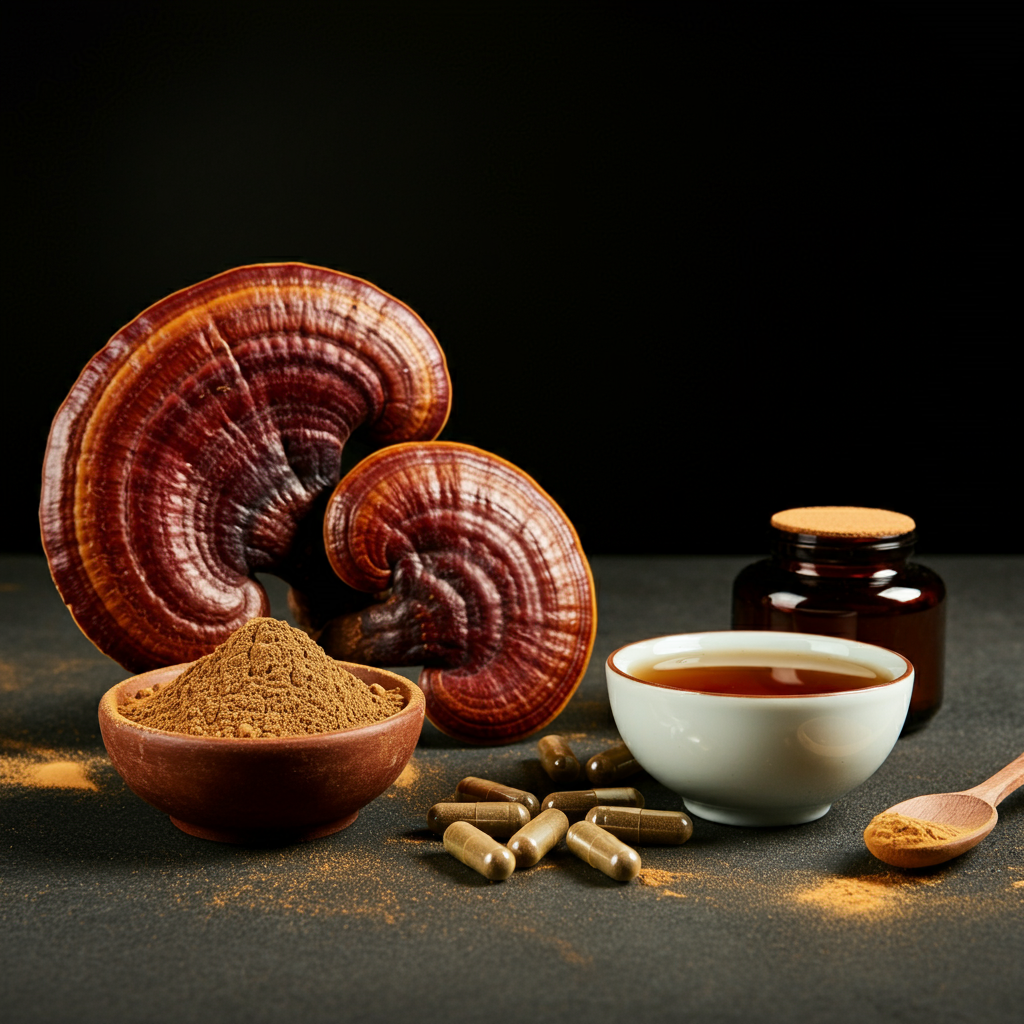
Beta-glucans are the immunomodulatory polysaccharides in medicinal mushroom cell walls — found in Reishi (Ganoderma lucidum), Turkey Tail (Trametes versicolor), Maitake (Grifola frondosa), and others. They drive the NK cell activation, macrophage stimulation, and gut microbiome effects documented in peer-reviewed mushroom research. Polydextrose adulteration is also related to the broader starch contamination problem — you can test mushroom powders for starch at home using iodine.
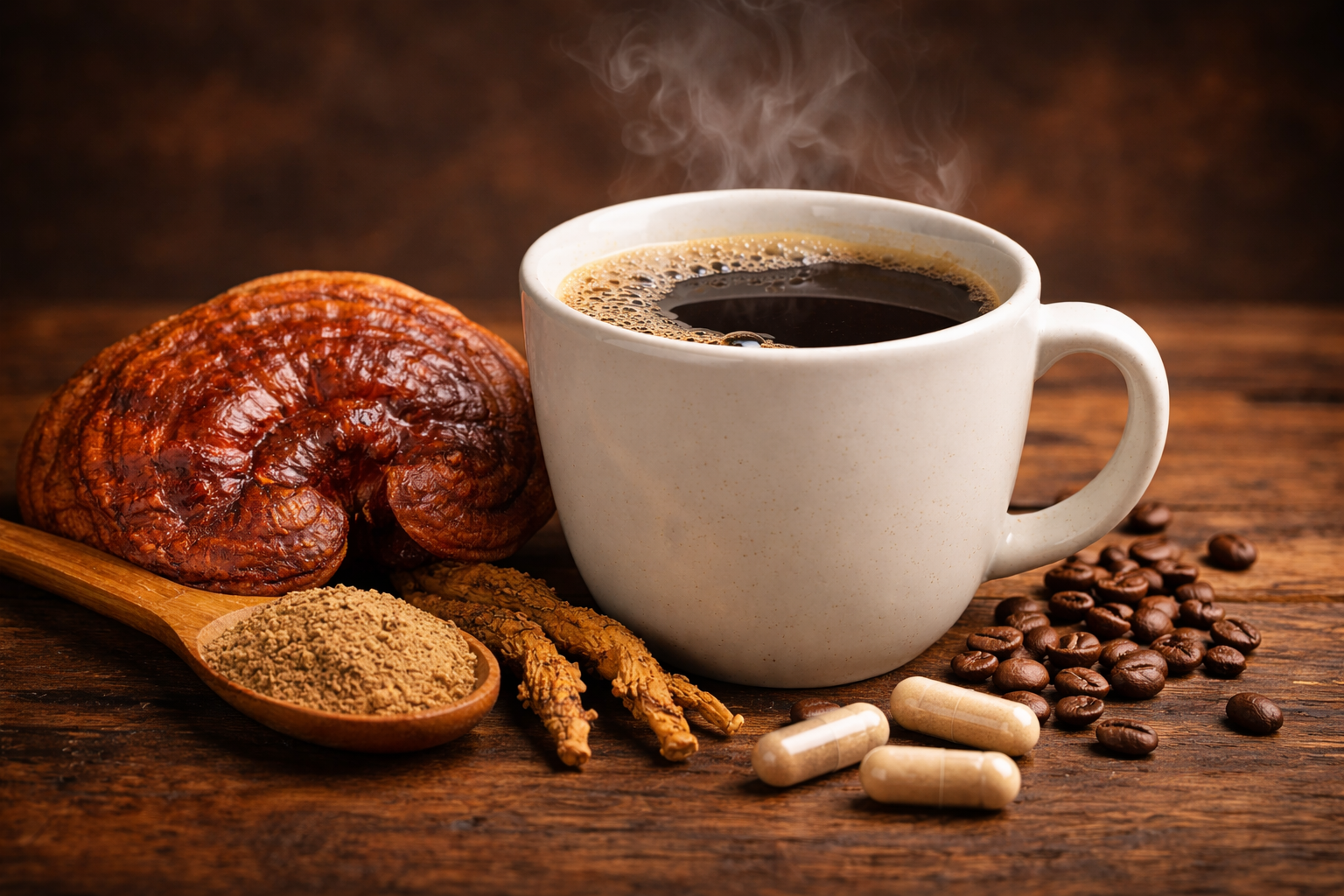
Because consumers now demand high beta-glucan percentages, manufacturers have learned to deliver them — on paper, at least. This is especially common in products marketed as mushroom coffee, where dilution and adulteration are harder to detect.
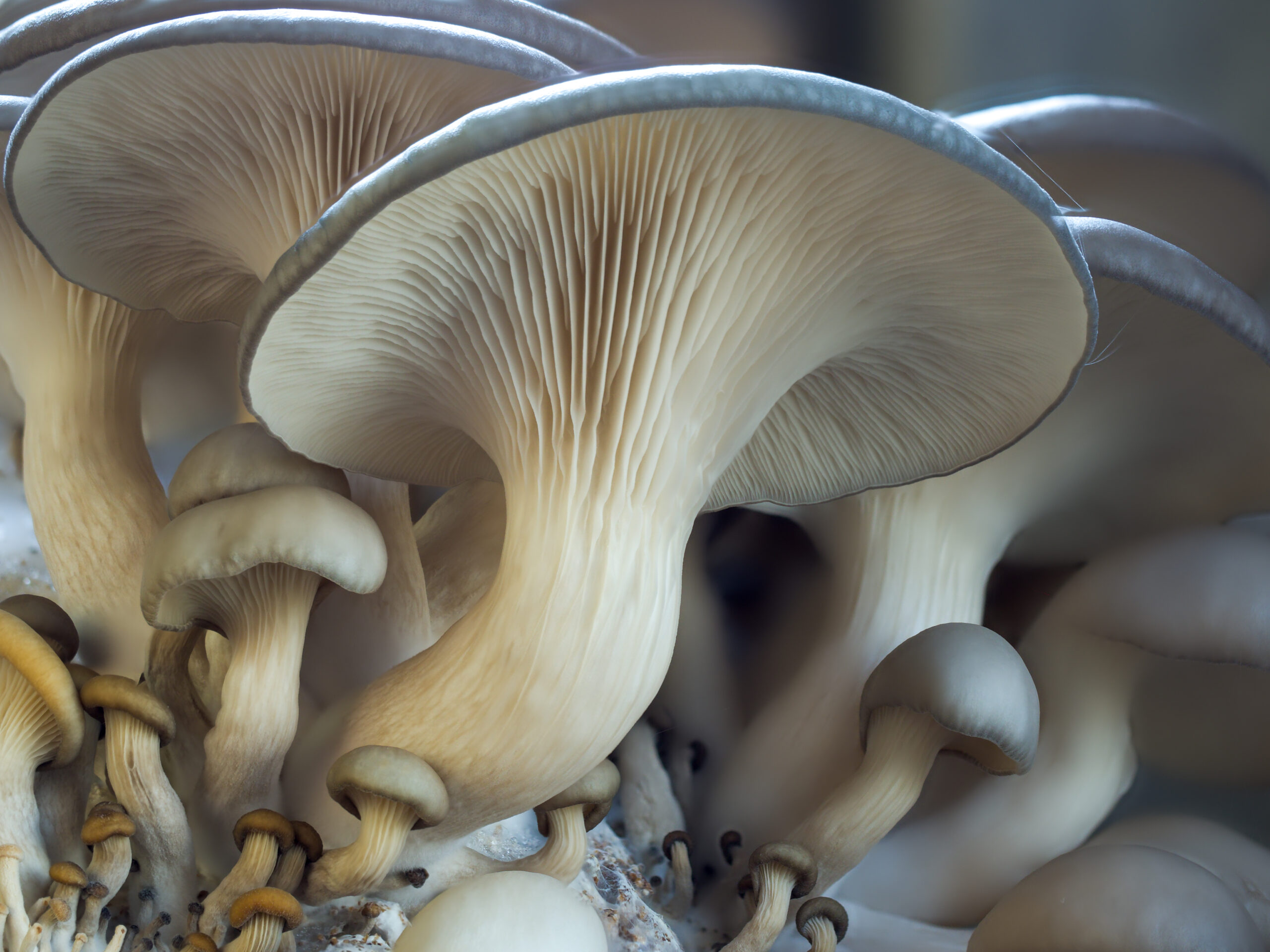
Beta-glucans are concentrated in the cell walls of fruiting body mushrooms.
The Mechanism
Why Polydextrose Fools Standard Tests
Polydextrose is a synthetic glucose polymer (E1200) used in food as a low-calorie bulking agent. The problem: it contains beta-1,3 and beta-1,6 glucosidic linkages — structurally similar to fungal beta-glucans.
The two most common testing kits (Megazyme’s Mixed-Linkage and Mushroom & Yeast Beta-Glucan Assays) work by cleaving glucosidic bonds with enzymes, then measuring released glucose. Polydextrose partially hydrolyzes under these same conditions, so its glucose gets counted as beta-glucan.
“This isn’t a testing artifact — it’s deliberate exploitation of a known assay limitation.”
The Problem With COAs
Why Standard COAs Don’t Catch It
If listed under “other ingredients” or “dietary fiber,” the manufacturer is in labeling compliance. The fraud is in the implication that the beta-glucan number reflects mushroom content.
A certificate showing “22% beta-glucans” measures total apparent beta-glucan equivalents, not fungal beta-glucans specifically. The distinction is everything.
Some protocols subtract starch-derived alpha-glucans from total polysaccharides. Polydextrose doesn’t register as an alpha-glucan, so it clears this filter completely undetected. This is also why understanding what a 1:1 fruiting body extract actually means matters so much.
Analytical Methods
How to Actually Detect It
Standard enzymatic assays can’t distinguish Polydextrose from fungal beta-glucans. These methods can:
HPLC Monosaccharide Profiling
Full acid hydrolysis followed by HPLC reveals sugar composition. Genuine mushroom beta-glucans appear alongside mannose, galactose, and fucose. Anomalously pure glucose is a red flag.
NMR Spectroscopy
The gold standard for structural characterization. NMR distinguishes the ordered beta-1,3/1,6 linkages in fungal beta-glucans from the random linkage pattern of Polydextrose. Expensive, but definitive.
LC-MS/MS
Can identify Polydextrose directly via its oligomeric fingerprint — sorbitol-terminated oligomers that are absent in genuine mushroom material.
Chitin Cross-Check
Authentic mushroom material contains chitin alongside beta-glucans. A high beta-glucan claim with near-zero glucosamine (the chitin marker) is a strong adulteration signal.
What to Look For
What Transparent Brands Do Differently
Reputable manufacturers provide data that makes adulteration obvious:
- Publish full HPLC monosaccharide profiles, not just one number
- Provide chitin/glucosamine data alongside beta-glucan content
- Explicitly confirm Polydextrose absence via capable third-party labs
- Clearly disclose fruiting body vs. mycelium sourcing
- Engage independent academic labs rather than relying solely on commercial services
“A single beta-glucan percentage, by itself, tells you very little about actual product quality.”
Key Takeaways
- Standard enzymatic assays cannot distinguish Polydextrose from genuine fungal beta-glucans
- A COA showing high beta-glucans is not evidence of high-quality mushroom content
- HPLC monosaccharide profiling, NMR, or chitin cross-checking is required for confident verification
- Check ingredient panels for Polydextrose (E1200) listed under dietary fiber or other ingredients
- Until FDA and USP standards are formalized, third-party verification using appropriate methods is the only reliable protection
No responses yet