Mushroom Supplements and Coffee: Does Coffee Reduce Bioavailability?
Mushroom coffee and other mushroom supplements mixed with coffee have become extremely popular in recent years. Many products now combine medicinal mushrooms with coffee to create drinks that promise energy, focus, and immune support.
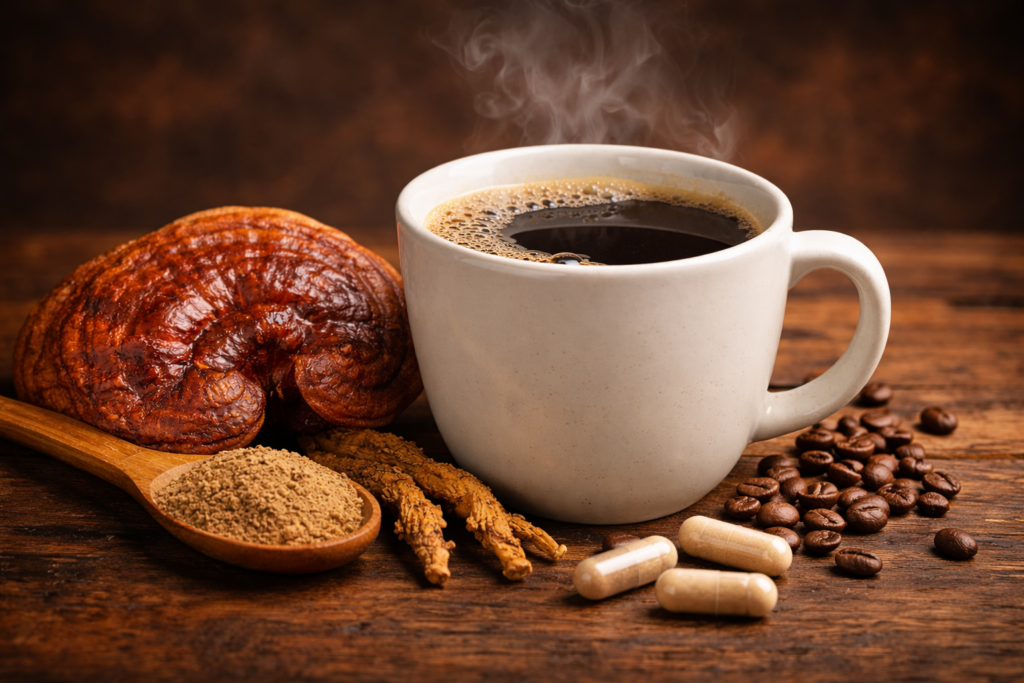
Some articles claim that compounds in coffee may bind to mushroom polysaccharides and block their benefits. To understand whether this concern is valid, we need to look at the science behind medicinal mushrooms, beta-glucans, and coffee polyphenols.
What Are the Active Compounds in Mushroom Supplements?
The most studied compounds in medicinal mushrooms are β-glucans, a type of polysaccharide found in the fungal cell wall.
These molecules are especially important in mushrooms such as:
β-glucans are widely studied for their immune-modulating properties. Instead of being absorbed like vitamins, these compounds interact with immune cells in the digestive tract.
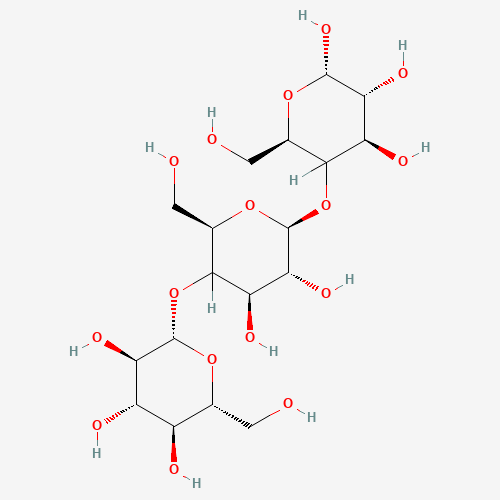
Immune receptors such as Dectin-1 and CR3 can recognize β-glucans upon their entry into the gut-associated lymphoid tissue (GALT). This interaction may influence immune signaling and inflammatory responses.
Because of this mechanism, β-glucan content is often considered one of the most important indicators of quality in mushroom supplements.
What Compounds Are Found in Coffee?
Coffee is rich in polyphenols, a group of plant compounds known for their antioxidant activity. The most abundant of these are chlorogenic acids.
Polyphenols in coffee have been linked to several potential health benefits, including:
- antioxidant activity
- anti-inflammatory effects
- support for gut microbiota
However, polyphenols can also interact with other molecules in food. Scientists have long studied how polyphenols can bind to proteins, enzymes, and certain carbohydrates.
This raises the question: Could coffee polyphenols interact with the β-glucans in mushroom supplements?
Can Coffee Polyphenols Bind to Mushroom Beta-Glucans?
Polyphenols can sometimes bind to large carbohydrate molecules through weak chemical interactions such as hydrogen bonding. These interactions are known as polyphenol–polysaccharide complexes.
Such complexes are commonly observed in foods containing plant fibers, including:
- fruit pectins
- cereal fibers
- starches
However, fungal β-glucans behave differently from many plant polysaccharides.
Many mushroom β-glucans exist as large, structured particles or aggregates, rather than flexible single chains. Because of this structure, coffee polyphenols are less likely to strongly bind to them compared with plant fibers.
When interactions do occur, they are typically weak and reversible.
Does Coffee Reduce the Bioavailability of Mushroom Supplements?
Some claims suggest that if coffee polyphenols bind to mushroom β-glucans, they could block the immune receptors that recognize them. In theory, this could reduce the immune-modulating effects of mushroom supplements.
However, there is currently no direct scientific evidence showing that coffee reduces the bioavailability of mushroom β-glucans.
Several factors make a major interaction unlikely:
1. Most β-glucans are large particles
Mushroom polysaccharides are often present as large aggregates rather than individual molecules. These structures can still interact with immune cells even if minor binding occurs.
2. Digestive processes break weak interactions
During digestion, food is exposed to changing pH levels, digestive enzymes, and bile salts. These conditions frequently disrupt weak molecular interactions that occur in foods.
3. Both compounds may reach the colon
Even if polyphenols and polysaccharides associate temporarily, they may travel together to the large intestine, where gut microbes can metabolize them.
For this reason, drinking coffee with mushroom supplements is unlikely to eliminate their biological activity.
Coffee and Mushrooms May Both Support the Gut Microbiome
Another important factor is the gut microbiome.
Both coffee polyphenols and mushroom β-glucans can influence microbial communities in the digestive tract. β-glucans can act as fermentable fibers, while polyphenols can be converted by gut bacteria into bioactive metabolites.
Because of this, the combination of coffee and mushrooms may still support microbial diversity and gut health, though more research is needed to fully understand these effects.
A More Practical Question: How Much Mushroom Is in Mushroom Coffee?
When evaluating mushroom coffee products, a more important factor may be the amount of mushroom extract included.
Many mushroom coffee blends contain relatively small quantities of mushroom powder compared with doses commonly used in clinical studies. In these cases, the limiting factor may not be coffee chemistry but simply the amount of active compounds present.
Consumers interested in the benefits of medicinal mushrooms may want to look for products that clearly list:
- β-glucan content
- extract ratios
- serving size
The Bottom Line
Current research does not support the claim that coffee significantly reduces the bioavailability of mushroom supplements.
Although coffee polyphenols can form weak interactions with some carbohydrates, these interactions are typically reversible and unlikely to completely block the biological activity of mushroom β-glucans.
For most people, consuming mushroom supplements with coffee is unlikely to negate their potential benefits. The quality of the mushroom extract and the amount consumed are likely far more important factors.
FAQ: Mushroom Supplements and Coffee
Does coffee reduce the effectiveness of mushroom supplements?
Current research does not show that coffee significantly reduces the effectiveness of mushroom supplements. While coffee contains polyphenols that can interact with carbohydrates, these interactions are generally weak and reversible. The β-glucans found in medicinal mushrooms are still likely to retain their biological activity when consumed with coffee.
Can coffee polyphenols bind to mushroom β-glucans?
Polyphenols in coffee, particularly chlorogenic acids, can sometimes interact with polysaccharides through weak hydrogen bonds. However, fungal β-glucans often form large, structured particles that are less likely to form strong complexes with coffee polyphenols. Even when interactions occur, they are typically temporary.
Does mushroom coffee contain the same amount of active compounds as mushroom supplements?
Not always. Many mushroom coffee products contain smaller amounts of mushroom extract compared with traditional supplements. As a result, the total dose of β-glucans may be lower than what is commonly used in research studies.
Can you take mushroom supplements with coffee?
Yes. There is no scientific evidence suggesting that consuming mushroom supplements with coffee is harmful or that it significantly reduces their potential benefits. Many people take mushroom extracts alongside coffee without issue.
What are the main beneficial compounds in medicinal mushrooms?
The most studied compounds in medicinal mushrooms are β-glucans, a type of polysaccharide known for interacting with immune cells in the gut. These compounds are commonly found in mushrooms such as Lion’s Mane, Reishi, and Cordyceps.
Do coffee and mushroom supplements affect the gut microbiome?
Both coffee polyphenols and mushroom β-glucans can influence the gut microbiome. β-glucans may act as fermentable fibers, while coffee polyphenols can be metabolized by gut bacteria into other bioactive compounds.
Is mushroom coffee a good way to consume medicinal mushrooms?
Mushroom coffee can be a convenient way to consume medicinal mushrooms, especially for people who already drink coffee daily. However, consumers may want to check how much mushroom extract is included in each serving to ensure they are getting a meaningful amount of active compounds.
Should mushroom supplements be taken separately from coffee?
Based on current evidence, separating mushroom supplements from coffee is not necessary. Any potential interactions between coffee polyphenols and mushroom polysaccharides are unlikely to significantly affect their bioavailability or biological activity.
No responses yet