Lion’s Mane Reduces Depression & Anxiety:
Nagano et al., 2010
A 2010 randomized controlled trial published in Biomedical Research found that four weeks of Lion’s Mane (Hericium erinaceus) fruiting body supplementation significantly reduced depression and anxiety scores in women. This was one of the first human clinical trials to investigate Lion’s Mane’s effects on mood, and its findings have been cited extensively in subsequent research.
The mechanism behind these mood effects appears to differ from Lion’s Mane’s well-documented NGF-stimulating action — suggesting anti-inflammatory or other neurochemical pathways may also be at play. Below is a complete breakdown of the study design, findings, limitations, and what the results mean for those considering Lion’s Mane for mood support.
Study Design
Methodology at a Glance
Results
What the Study Found
Compared to the placebo group, women consuming Lion’s Mane showed significant improvements across two primary mood and wellbeing scales. The effects were notable given the low dose (2g/day) and short intervention period (4 weeks).
Depression Scores (CES-D)
Significantly lower in the Lion’s Mane group compared to placebo after 4 weeks of supplementation.
Indefinite Complaints (ICI)
Total indefinite complaint scores significantly reduced. “Palpitation” and “insensitivity” subscales significantly lower than placebo.
Anxiety & Irritability
“Anxious,” “irritating,” and “concentration” subscale scores trended lower in the Lion’s Mane group — though not reaching statistical significance individually.
“The results suggest that HE intake has the possibility to reduce depression and anxiety through a mechanism different from the known NGF-enhancing action of Hericium erinaceus.”
Notably, sleep quality (PSQI) and menopause symptoms (KMI) did not significantly differ between groups, suggesting the mood effects are not simply explained by improved sleep or hormonal changes. This points to a direct neurological or anti-inflammatory mechanism.
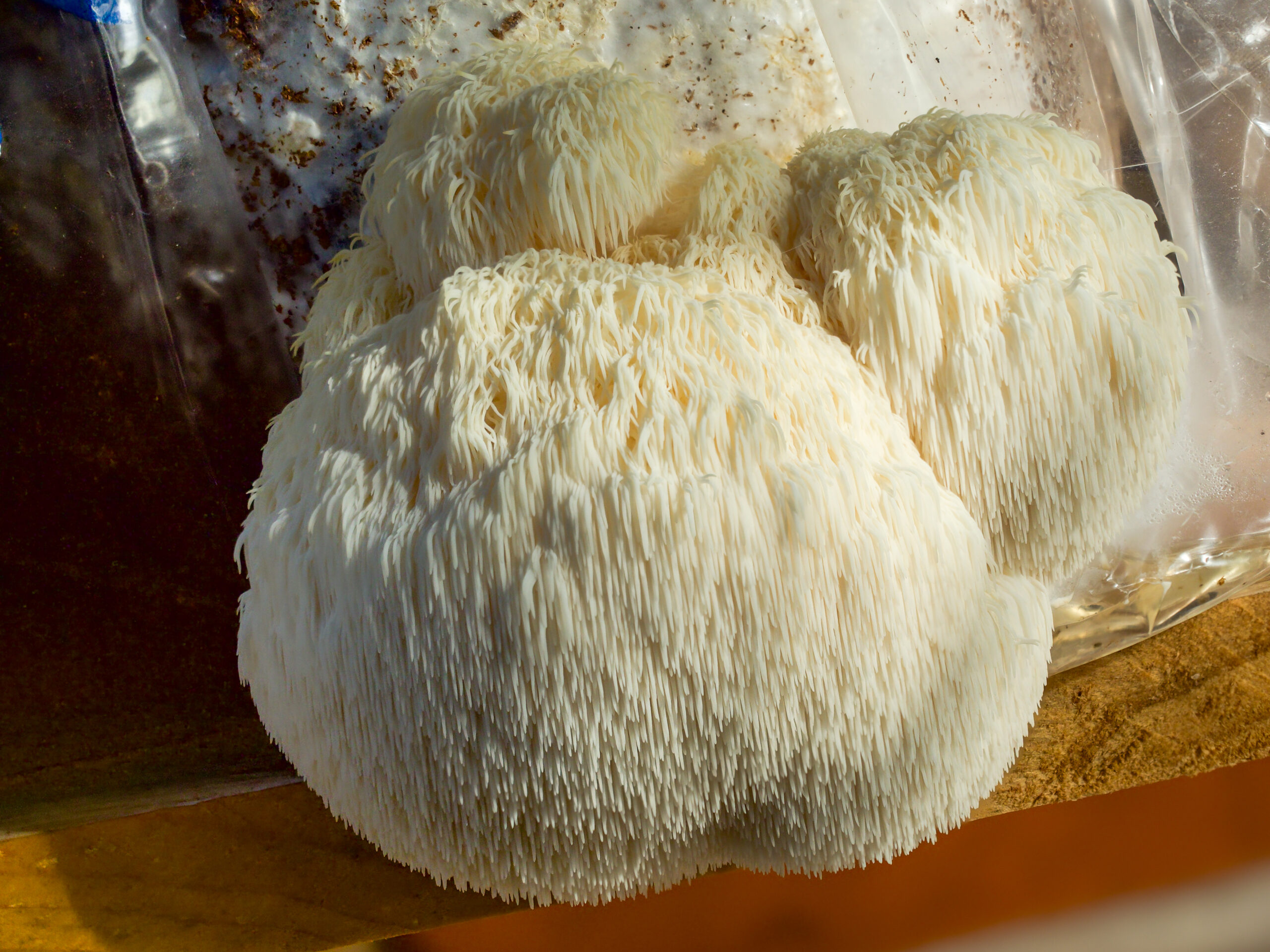
Lion’s Mane (Hericium erinaceus) fruiting body — the form used in the Nagano 2010 trial.
Interpretation
What This Means for Supplementation
The Nagano 2010 trial used just 2g per day of fruiting body powder — a relatively low dose by modern supplement standards — and still produced significant reductions in depression scores over four weeks. This suggests Lion’s Mane may have meaningful mood effects at doses accessible from most quality supplements.
The authors’ note that the mechanism differs from NGF enhancement is significant. Lion’s Mane contains hericenones and other bioactive compounds with anti-inflammatory and antioxidant properties that may independently modulate mood pathways — including serotonin and dopamine systems — without requiring NGF stimulation.
This study’s findings have been directionally replicated in larger trials:
| Study | Duration | Key Mood Finding |
|---|---|---|
| Nagano et al., 2010 (this study) | 4 weeks | ↓ Depression (CES-D), ↓ anxiety trend |
| Okamura et al., 2015 | 4 weeks | ↓ Anxiety & insomnia trend (GHQ-28) |
| Vigna et al., 2019 | 8 weeks | ↓ Depression 34–36%, ↓ Anxiety 42–50% — effects maintained post-washout |
| Docherty et al., 2023 | 28 days | ↓ Subjective stress trend at day 29 |
Across these trials, the direction of effect is consistent: Lion’s Mane appears to reduce subjective depression and anxiety with continued use. The Vigna et al. (2019) study is particularly notable — effects persisted for 8 weeks after supplementation stopped, suggesting lasting neurological changes rather than acute masking of symptoms.
Practical takeaway: if using Lion’s Mane for mood support, allow at least 4 weeks of consistent daily use before evaluating effects. The study used fruiting body powder — ensure any supplement you use is a genuine fruiting body extract, not a mycelium-on-grain product with diluted bioactive content. See our supplement buying guide for what to look for.
Critical Appraisal
Study Limitations
The Nagano 2010 trial is an important early study, but its limitations should be understood before drawing strong conclusions:
- Small sample size. Only 30 participants enrolled, 26 completed the study. This limits statistical power and the ability to detect smaller effects.
- Women only. The all-female participant pool makes it impossible to generalise findings to men. Whether the same mood effects occur in male populations is unknown from this trial alone.
- Short duration. Four weeks is enough to detect acute effects but insufficient to assess long-term mood changes, tolerance, or durability of effects post-supplementation.
- Cookie delivery method. Lion’s Mane was consumed in cookies rather than standardised capsules. This makes it harder to control for placebo effects related to food enjoyment or changes in eating habits.
- No bioactive verification. The study used powdered fruiting body without verifying specific hericenone or beta-glucan content, making it difficult to compare directly with modern standardised supplement products.
Despite these limitations, the study’s design (randomized, double-blind, placebo-controlled) is methodologically sound for its size, and its findings align with the broader body of subsequent evidence.
Recommended Supplements
What to Buy If You’re Trying Lion’s Mane for Mood
The Nagano study used fruiting body powder — the form with the most clinical evidence for mood effects and the richest source of hericenones. Avoid mycelium-on-grain products, which contain substantially less bioactive content. Our two recommended fruiting body options with verified quality:
Lion’s Mane Extract
100% fruiting body, certified organic, hot water extracted. Beta-glucan content verified per batch. The most trusted fruiting body Lion’s Mane brand on the market.
- 100% fruiting body — no grain filler
- Certified organic
- Beta-glucan COA verified per batch
- Capsule and powder options
Lion’s Mane Extract
Fruiting body extract with HPLC-verified bioactives and batch-specific COAs publicly available. Rigorous in-house analytical testing infrastructure.
- Fruiting body — HPLC verified
- Batch COAs publicly listed
- cGMP facility, FDA registered
- Capsule and powder formats
For those also interested in the erinacine pathway — Erinacine A for NGF/BDNF stimulation — see our comparison of Real Mycelium vs Erinamax. Note that the Nagano study used fruiting body only, so erinacine products are a separate consideration for cognitive rather than mood endpoints.
FAQ
Frequently Asked Questions
Clinical evidence is promising. The Nagano 2010 RCT found significant reductions in depression scores (CES-D) after 4 weeks at 2g/day. The larger Vigna et al. (2019) study found depression decreased 34–36% and anxiety 42–50% over 8 weeks, with effects persisting after supplementation stopped. Lion’s Mane is not a clinical treatment for depression, but shows consistent directional effects on mild mood symptoms across multiple trials.
30 women received either 2g/day of Lion’s Mane fruiting body powder (in cookies) or placebo for 4 weeks. The Lion’s Mane group showed significantly lower scores on the CES-D depression scale and the Indefinite Complaints Index. Palpitation and insensitivity subscales were significantly lower; anxiety, irritability, and concentration scores trended lower but did not reach individual significance.
2g per day of powdered Lion’s Mane fruiting body, delivered as 4 cookies each containing 0.5g. This is at the lower end of modern supplement dosing — most quality supplements recommend 1,000–3,000mg per day. The fact that effects were observed at this modest dose is encouraging.
The main limitations are: small sample (30 participants), women only (can’t generalise to men), short duration (4 weeks), cookie delivery method complicating controls, and no verification of bioactive content in the mushroom powder used. Despite this, the RCT design is sound and findings have been directionally replicated in subsequent trials.
Fruiting body only — powdered and delivered in cookies. This is important because hericenones (the neuroactive compounds in fruiting body) are believed to be responsible for the mood effects observed. Mycelium-on-grain products would have substantially different bioactive profiles and likely wouldn’t replicate these findings.
Based on the available trials, meaningful mood effects appear after 4–8 weeks of consistent daily use. The Nagano study found significant effects at 4 weeks; Vigna et al. (2019) found the largest effects at 8 weeks. Allow at least 4 weeks before evaluating whether Lion’s Mane is working for mood support.
No responses yet